
“Do you want to see Saturn?” my dad asked me, his profile outlined in faint gold from a distant street lamp. At five years old, the red Dobsonian telescope was bigger than me by more than a foot. I cautiously stepped onto a small, beige stool placed carefully in front of it. Standing on my toes, I peered into the eyepiece of the first telescope I’d ever encountered. All alone and surrounded in pitch black, my eyes found a tiny Saturn. I shifted from amazement to bewilderment at what I was seeing. My first time comprehending something so vast, beautiful, mysterious and distant. It didn’t seem real.
It was the four of us on that night, my mom, dad, sister and me. We looked at the moon next, because it was the brightest. “Always look at the moon last” my dad would say. It was equally mesmerizing, with a blinding light I had never noticed until that night. My eyes poured over each crater, looking for movement, for a sign of life. I was in disbelief that this was the same moon I’d known all my life. I didn’t want to take my eye away. We stood together in the darkness of our driveway, gazing up into an endless sky. It is one of my favorite childhood memories.
As a kid my universe had always been our house in the suburbs right outside of Houston. It sat on a cul de sac, just down highway 528, a few miles from Nasa. The signature two magnolia trees in the front yard that my parents planted when I was a baby. One garage door was always opened with my dad’s van parked inside when he was home from work.
The driveway was where my sister played basketball. The yard was where in second grade, I learned the hard way that snow could not be used to make a beard on your face. The same yard where my dad habitually cut the grass every weekend, as one has to in the tropical climate of Houston. Over many years of hard work, my mom and dad had transformed both the back and front yards into beautiful gardens of trees and flowers. With time and age I later realized how lucky I was to have had that permanent home for as long as I did.

Twenty-eight years later, I was an adult living in another state. I was back in college getting my second degree in Art Education. I had a degree in Studio Art Painting from the University of Houston. The degree people sniff at before saying something like, Oh wow you’re so poor! A degree I was too ashamed to even acknowledge due to a horrifying GPA earned by failing and dropping my math credit an impressive seven times. Eight times the charm! Not just anyone can do that, but that’s another story.
It wasn’t all that bad considering my time there I met my husband, Jon. His parents lived in Oklahoma so after I finally graduated I encouraged us to go back so he would no longer be paying out of state tuition. It felt like a fresh start but I had no idea what to do with my life.
At thirty one, I finally stopped dragging my heels on what I’d always known I would do, teach. I was extremely intimidated at the thought since I’ve always been a fairly introverted person with a somewhat reserved disposition. but I had decades worth of insight, experience and skills to offer.
I had struggled for much of my twenties with anxiety. A lot of it stemming from becoming partially deaf at eighteen (another story) and being afraid of how to do any job without people looking at me like I’m stupid or a waste of their time. I was going to have to live my life, anxiety or not, deaf or not. I was ready to move on. I was excited about finally having a tiny piece of the world where I could actually share my knowledge. The art didn’t make me nervous but I didn’t know anything about teaching. I was lucky to have a school close by while living in Oklahoma to help with that part.
•
My dad had warned me that it would be a difficult job, with no financial support. Regardless, I stayed on my path, determined to have success. The classes were quite interesting and I was genuinely enthralled with all I was learning. I was taking a developmental psychology class that focused on the different stages of human growth, mentally, emotionally and socially. Things to help teachers understand students with as little bias as possible, or at least that’s the hope.
We had a big project where I had to interview someone for a paper on “generational traits and their experiential timeline.” Basically, it’s getting an idea of someone’s childhood, home life, school experiences and how it all formed them. I immediately thought of my dad. He had always been a sort of private figure in my life that I never felt like I knew as much as I wanted to. He wasn’t a chit-chat person. He only talked if there was something to actually talk about.
There were a few things I knew without question, my dad was hard working and quiet. His life wasn’t like most dad’s I knew. Mike, or Miguel, (we never called him by his birth name) was the oldest of five children from a mom who had an eighth grade education and a father who didn’t know how to read or write. They were migrant workers, Mexican Americans. In actuality, my entire family are south Texas natives from way before people with flags ever showed up. Even a DNA test showed our native ancestry running from the tip of south Texas all the way up to New Mexico. We never went far, I guess we liked our home.
My dad’s childhood consisted of days spent in fields picking cotton or produce. Most typically, he and his younger brother Pete worked alongside their parents picking cotton for hours. He described the massive burlap sacks that they were given and how his mom always picked twice as much as his dad. “It drove him crazy! He could never figure out how she did it!” He surmised, as logically as he could, “I think her petite fingers helped her maneuver the seeds faster than him and she could get more cotton out that way. It really pissed him off!” He chuckled thinking about it.
My dad’s first real home was not until he was about six. Before that there had been a lot of moving around for jobs and living with other family members, as well as others coming to live with them. It took a while to find some stability. It seemed to occur when his dad got into oil field work in west Texas. No more cotton, no more moving. Over the course of a decade, their life dramatically changed from that oil money. Unfortunately my dad was long out of their house by then and didn’t get to enjoy that part.
When it came to school and his own education, his parents didn’t get involved or keep in contact with his teachers. In my dad’s words, “the only reason you would talk to a teacher was if you did something bad.” I could begin to see how that mindset had kept him from being more involved in my own education as I grew up. I always interpreted him as not caring and unfortunately, I’m sure my teachers felt the same. I began to realize that was how things were for a lot of people in his generation, especially those who didn’t speak English as a first language.
At the beginning of our interview on the phone, he recalled a memory of how on the first day of school he and his younger brother Pete took the bus for the first time. At the end of the day they got on the wrong bus to go home. Laughing he said, “We thought, well the bus brought us here, it will take us back!” After a long trip into unfamiliar territory, the driver returned them to school. They sat crying on the front steps until their mom came to retrieve them, all of which my dad retold in great humor.
•
At my dad’s school there were two classes for each grade. One was referred to as A class, the other was B. My dad said the white kids were in the A class while the Mexican kids were in B. My dad was put in the A class. My father was not white passing, but he wasn’t dark complected either. He didn’t know why he was put in that class but as a result he said his English became much better and his grades were good because of the advancement of the A class material. Like a domino effect, his learning even influenced his parents to speak more English at home because he could.
It pains me how few people understand the history of Spanish speakers from that time in Texas. My parents were a pocket of Mexican Americans who never learned Spanish in a formal school setting, as you would learn to read or write English. Their native language was all learned and passed on verbally, they didn’t write it. Upon entering school, they were forbidden to speak Spanish, punished if caught. Placement in either of those A and B classes still meant assimilation for a Spanish speaker. Remarkably, my dad still believed that it was “in the best interest” of the kids. A belief that I can never decide was either a successful indoctrination or simply the inevitable. Perhaps it was both.
The A class had given my dad an edge on academics and not only in his English speaking. On the other hand he was teased spitefully about it by his peers. His own brother Pete, who was in the B class, resented him. My dad never conveyed negative emotions about any of his experiences, until this memory. With a rare amount of hurt in his voice, he couldn’t believe that his own brother called him “white” in the middle of a heated argument. It was never his choice or decision having been put in that class or all the other things that came with it.
Through these interviews I heard my dad at his happiest, digging through his memories, of which I listened attentively as a journalist. Under the age of ten, my dad was taking care of his baby sister (Imagine cloth diapers that had to be hand scrubbed of poop in the dead of winter and you’re also seven.) As he got older he had to feed the chickens and pigs as well as cook dinner for his parents when they got home. I got the feeling that being the oldest automatically made my dad responsible for a lot of things his other siblings were not. The kind of things eldest daughters typically got inundated with.
My dad’s childhood is famous for his mischievous endeavors that came from innocent and inquisitive ideas. Things I promised to remember as a teacher for when moments of, “what were you thinking?’ would occur. The most popular story was about his mother’s tinsel Christmas tree, which was popular and likely expensive back in the day. The Blue Christmas song must have been popular around that time and my dad being an Elvis fan took it upon himself to spray paint this tinsel tree blue. His mother was not a fan. “I thought it looked good!” he laughed. “You know what she did? She cried!” followed by more laughter.
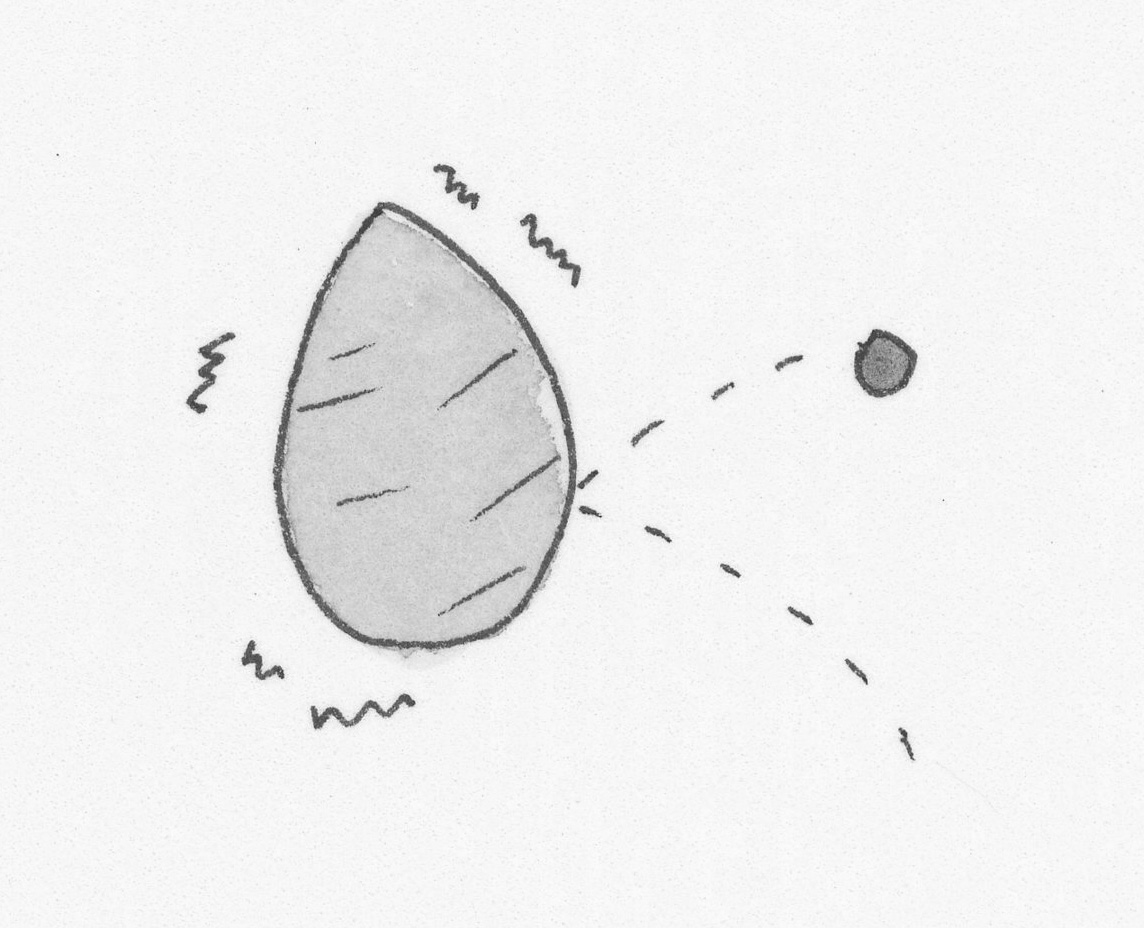
Another story of my dads childhood involved his brother Pete and sister Alicia. My dad was the oldest at about 12, his brother Pete would’ve been about 10, making their sister Alicia around 8. My dad and Pete were outside in the dry Texas fields looking for something to get into. From across a street they spotted a bees nest hanging from a tree. My dad’s curiosity kicked in, “I wonder if they could find us that far away?”

He and Pete picked up some rocks and carefully studied their target. If they hit the nest and they were far enough away, with added running… maybe they could avoid being detected. This was the hypothesis anyway, but it had to be tested, of course. Ready and aiming, they proceeded to launch rocks at the target. It took a while but my dad got it. They immediately took off running as fast as they could but it was useless. My dad said, “it was like those cartoons, where the bees make a dotted line pointing right at you.” Pete and Mike yelled and flailed their arms wildly in defense as they attempted to escape the furious anger of bees. With great luck they managed to run far enough back to the house, evading an ambush.
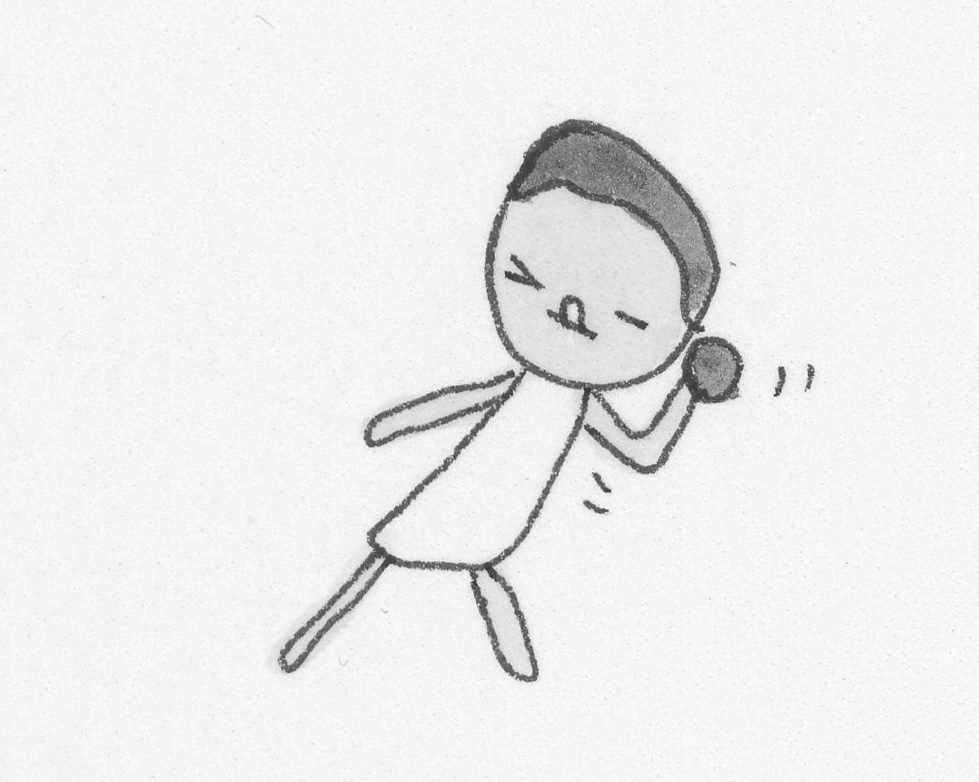


As they stopped to catch their breath and laugh at their close call, their sister Alicia stood in front of them smiling. Just like a little sister, she had been trailing behind them all along and they hadn’t noticed. My dad said, “me and my brother were used to doing stupid stuff and getting in trouble but if something happened to Alicia, we would get our asses beat.” It’s at this point that their laughter stopped, upon realizing she had a bunch of bees, trapped in her poofy hair.


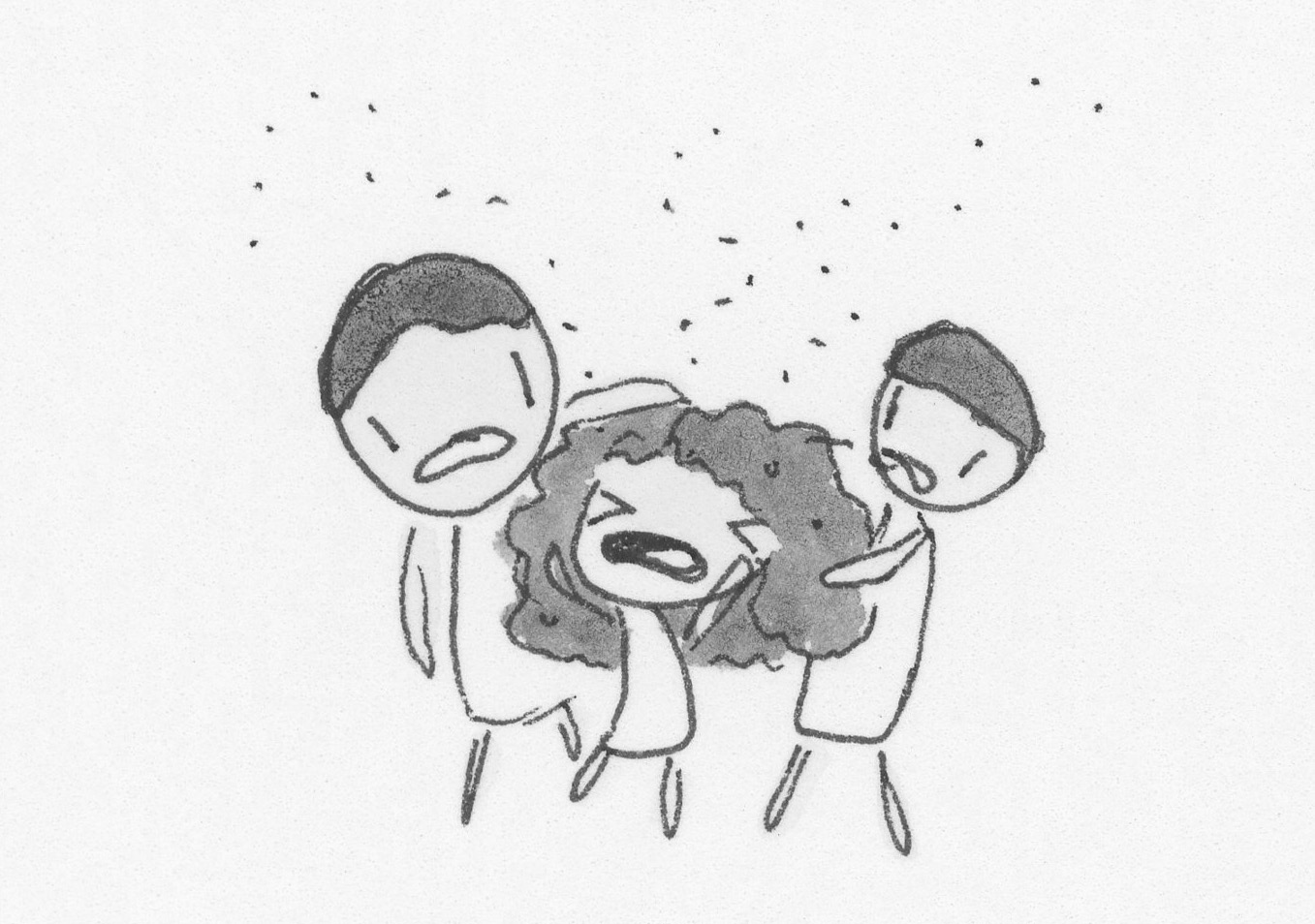
“She had all this thick, curly, dark hair and they were all stuck in it, her hair was buzzing and she started screaming!” Mike and Pete frantically beat her hair and somehow freed the bees, with little to no damage. No one found out. No one got beat… except her hair.
In case it hasn’t been clear, my dad’s childhood was one of struggle, financially for their family anyhow. It was also a different time. They didn’t have indoor bathrooms yet. So it was typical for Pete and Mike to bathe outside in a big metal tub. Except one evening it was a bit cold. Being kids, they thought if they made a fire, it would keep them warm and looked for something to burn. An old tire nearby would do the trick. They bathed happily, warmly in the soft amber light. Eventually, as they kept washing, they realized they were getting darker. The soot from the tire was falling on them, their faces streaked with black!
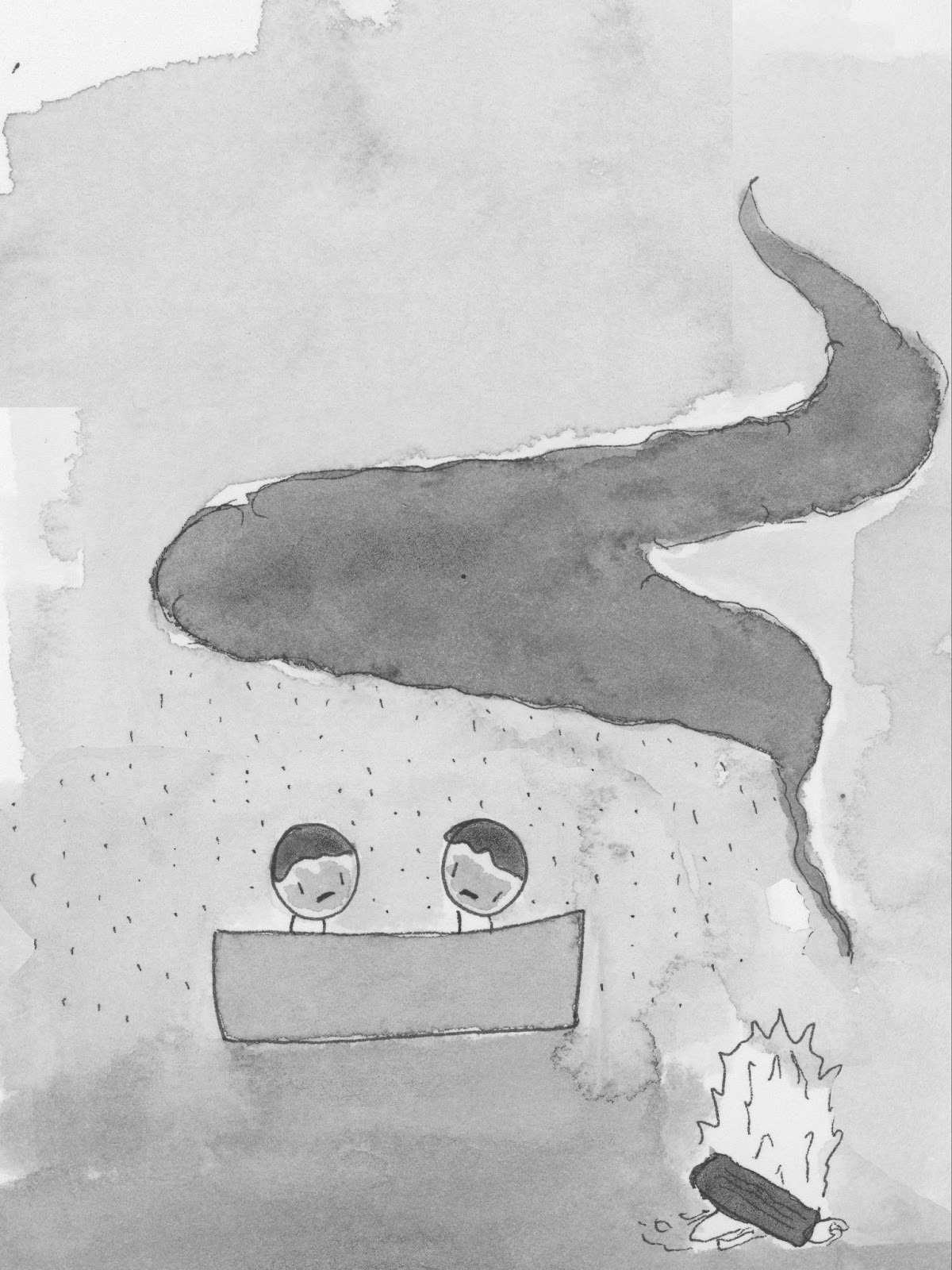
He actually never told me how that story ended. Let’s hope not with a paddling.
Another memory was of being left home alone and hungry. My dad stared at their only menu of peanuts, corn chips and peppers. My dad roasted the peanuts with the peppers, mashed them up and dipped his chip in the spicy paste. He said Pete turned his nose up at the concoction at first but then after trying it, fought him to eat the rest. He also spoke of the fields of corn that farmers lit on fire at the end of the harvest to clear it all out. He and Pete saw free popcorn and went to go feast. After stuffing themselves with popcorn their faces would be black with soot like raccoons.
As I continued to interview him he told me that if his mom bought a newspaper he would read it, but he loved reading comic books. He had a good and bad pair of shoes. Lord help you if you messed up one of two pairs of clothes or shoes. There were trips to town that would sometimes end with ice cream cones. Of course it was so hot in Texas you had to eat it quickly before it would melt, which was followed by throwing it up.
At thirteen he got a job at a Texaco filling gas and changing tires. He soon learned to use some of his earnings to secretly treat himself to a hamburger. He laughed at the novelty of finally gaining weight in his otherwise fiscally restricted environment, a luxury for poor people back then, “I actually got chubby!”
At fourteen, his dad had lied about his age in order to get him to go with him working on oil derricks during summers, weekends and holidays. It was extraordinarily dangerous, back breaking labor, often done in extreme heat. In the beginning, after a day of sledgehammering concrete, his hands shook violently to the point where he could not even pick up a glass of water.
A few years later at seventeen a pipe fell on his hand, crushing it, which required a trip to the emergency room. It healed on the surface but never worked quite right again, something in my thirty two years of being his daughter, had never known. Interestingly enough, he mainly recalled being far more embarrassed by the candy striper girls close to his age, who had to tend to him in the hospital.
Then the conversation shifted to a darker story, about a young man who had died one day, falling from up high on the oil rig. It was a job position that paid well because of its extreme risks. He talked about how long the body laid on the field in the hot Texas sun until someone finally came to get it. If he had witnessed the actual fall, he wouldn’t reveal it to me in any way. In a few adjectives and strange simplicity, he said, “it was a terrible day.” Of course my dad would eventually do the same job. After all, it paid more.
•
My grandmother, his mom who faced many hardships of her own, was a huge influence on my dad’s life. As long as I knew the woman, she was always laughing, cooking, working, smoking or on occasion, drinking. This was not a gentle or cuddly old lady. She was direct, organized, determined and funny as hell. I will never know the exact conditions of my dad’s life during childhood, I do not know the depths of poverty they experienced because my dad would never share that. I have a general idea of what it might have been.
In times of great machismo, my grandma had to pick her battles as a wife because it was generally forbidden to go against your husband in any way. There was one particular battle she did not budge on, involving my dad’s education. His dad wanted to take him out of high school, to work with him full time in the oil fields. My grandmother, Herminia, would not allow it. The cycle of poverty, going from job to job and whatever she had experienced, would not continue if she had anything to do with it. She would see to it that when her son finished school, that there would be a difference, even if she didn’t know what it would be.
His sophomore year of high school, Herminia had a stroke. It occurred while cooking in the kitchen, in the middle of a laugh that became a scream. Another memory that seemed vivid to him but that he never spoke of. It took her six months to recover. She suffered major facial paralysis on one side and could not speak. When I was interviewing my dad about this, he never once expressed any sadness. Talking about or sharing emotions was not part of their family life, there was no time for that. What they did practice was dark humor, something they were quite good at. My dad described the ordeal of his mom being away at a hospital with, “It was a terrible time. There weren’t any tortillas… for months!” he exclaimed with amusement.
My dad struggled with anything emotional, it was simply out of his range but he did have other gifts. He could be quite funny. Much like his parents, he could tell incredible stories, full of impersonations. One of my favorites was an annoying customer at the shoe store he worked at accusing him of stealing her kids old shoe. “It looked like a tiger had played with it” he said, rolling his eyes and pretending to hold an invisible shoe by one string in disgust.
One of the biggest regrets I have was not recording my grandma on a trip in high school in which I asked her about her life. She proceeded to tell the saddest stories and yet we were howling and crying with laughter, the entire time. It was one of the most amazing experiences. They had a gift for being hilarious without even trying to be. Maybe they should have been in theater, or comedians. I miss their storytelling.
•
When my dad was in high school he had a fantastic story about some neighbor’s pressure cooker that exploded. When he heard the blast he had no idea what it was, but sprung into action. Heart pounding, running out of his yard through the grass he made his way into the nearby house. There, he found the kids standing silently, stunned, and disfigured.
The pressure cooker had exploded and made a hole in their roof, where it shot straight up. My dad became weak. He said it was like a bomb had gone off, everyone was wobbling around dazed. He felt sick, looking at the kids standing in shock with pieces of their face exposed. “I thought, oh my god… their faces, it must be burned, it was horrifying.” Then he realized it was nothing more than pieces of uncooked pork that had landed all over them.
A year after high school, his life changed dramatically going overseas during Vietnam while in the Air Force. The experience seemed to make him realize he was on his own for good. He never knew that my mom had told me when I was a kid how isolating and traumatizing the experience was for him. How his family didn’t seem to care about him being gone, let alone what he was dealing with. “They couldn’t even find where I was on a map.” They never sent him one package in the three years he was gone.
Returning to a new America that hated him for what he served, he threw every single thing from the Air Force away. I only know this because of my mom telling me. His dog tags, jackets, patches, hats, anything related to it. One night when I was a teenager he spoke bitterly of being used in that war to load bombs into the planes. It was one of few times he conveyed real pain and disgust at what he naively helped carry out. It clearly haunted him and his conscience. He suffered nightmares for years, triggered whenever helicopters or jets flew over the house as he slept. All of these darker things I knew only from my mom telling me.
I found one picture of my dad from when he must have first joined the Air Force. He’s almost unrecognizable because of how gaunt he looks. It’s one of few pictures from this time after high school and before he left the service. I have no idea what he went through, being a Mexican kid from a tiny southwest Texas town, to Okinawa and Thailand. It must have been jarring to say the least. It definitely opened up his world and mind to different cultures, people and ideas. Even though he never said it, I got the feeling that after all that, you can’t really go back home.
Starting out on his own, before he got married, my dad tried to go into a water processing career but it didn’t pay enough. He told me he thought he was going to be a “good guy, helping to save the earth” by doing something positive like cleaning water. Later he realized that all of his superiors were incredibly racist and prejudiced older men, having no intention of promoting him or his hard work at all. He knew he had to leave for something better. Then he kind of laughed, that he traded it all to work for the bad guys, a chemical plant!
Secretly, he was always sensitive about that, the fact that those companies were causing pollution. All the same, he’d always been defensive and adamant that the plastics they made saved lives with their infinite uses. Necessities that hospitals and lots of people rely on. He made it out of his home town. He was making real money. My dad was incredibly proud of what he’d accomplished with no college degree.
My dad didn’t tell me the story about the water processing plant in which one of the guys had a high powered hose and pretended to accidentally, “almost hit him,” though clearly intentional and it could have killed him. He didn’t tell me, again, my mom did. I’ve always wondered why he chose not to share some of those memories with me, why he gave me polished versions of things.
Like the time he and my mom waited in a restaurant in another Texas town until they realized no one would serve them, so they left. Maybe it’s the same reason I never talked about when my P.E. teacher couldn’t read an African name off the roll sheet on the first day of third grade, pointed at me laughing to another teacher and said, “It’s probably that one.” It felt uncomfortable that they treated me as if I couldn’t hear and it felt odd to be a kid realizing I was smarter than a grown man. Sometimes the audacity of other people’s ignorance is too embarrassing to want to repeat.
•
Growing up, I had a specific image of my dad etched into my mind as far back as I can recall. He always wore blue shorts, a t-shirt and a pair of flip flops. He was usually outside working on the yard, the van or cooking. On his days off he’d sit in his recliner, hands behind his head, feet crossed watching a baseball game. He loved watching baseball. We took many trips to the Astrodome when I was a kid and saw quite a few baseball games. On his off days, he was never without an Astros hat. When I finally graduated from college in Houston, he bought a bunch of U of H hats, which I found amusing.
My dad didn’t have friends, he was tired all the time and not interested in socializing. My whole life, my dad worked shift work at a chemical plant. He started at the bottom, first being a lab technician, eventually becoming a supervisor and then finally becoming a specialist from knowing each and every part of the place. Most people in my life didn’t understand him, or us. They did not get what shift work does to a family, more importantly, to a person. Many people were quite happy to be judgmental:
“I never see your parents do anything.” – a friend
“My moms tired of driving us around when your dad’s van is always home!”- another friend
“Having to be quiet all the time? That sounds like a terrible childhood.” – a teacher
None of those people had ever done twelve hour shifts from 5pm to 5am. All of which my dad was an hour and half early for, to ensure he knew exactly what was going on because people’s lives depended on it. No one ever considered that it might be good for a kid to learn to be courteous to other people who are going through things, instead of only thinking of themselves. None of those critical people knew what it was like to go from working all night for a week, to shifting back into daytime the following one, for months and years on end. Shift work means alternating drastic schedules weekly, until your body ages twenty years too fast. My dad was tired, for a reason.
Shift work is something that has become clearly linked to an early death because of the erratic hours. It takes a toll on your entire life, including your family’s. But still, this job was a massive opportunity for a person with no degree. It was also a huge sacrifice that was paid for in my dad’s time and health. No one saw or understood those sacrifices. It was far easier to make massive judgments from the outside.
It was also something that took decades for me to piece together to understand why he did it, as well as how on earth he did it all. Decades later I can finally see him as the adult who felt responsible for everything, all of us. He wouldn’t jeopardize his job, that provided us a life he and my mom never got to have. In the last years of his life he candidly shared with my brother in law, who was also feeling that unyielding pressure, “Yea, you can’t fuck up.”
I learned a lot about my dad on that psychology project. It was the first time I began to see him as a complete person, not the fragments of my own childhood memories. He had experiences that I couldn’t possibly identify with. It was amazing hearing him speak about being a kid, a teenager, a person I never knew. I spent my spring break interviewing my dad, talking for an hour, a few times a day. I was happy that I had an excuse to get him to talk.
At one point we discussed his brother Pete, who had recently passed away earlier that month. He seemed a bit shocked and sad, as much as a person like him could show anyway. Thinking back on that week, there was so much evolution to our relationship taking place. It hadn’t occurred to me how precious our time had been. There was no way I could have known that just one year later, as unthinkable as it was, my dad would also be gone.
 Shine A Light On Me