My dad and I didn’t talk much at all and that didn’t bother us. That was the way we were. I would spend most of my young life struggling, straining to think of things to say to be funny or interesting. Failing mostly, and eventually coming to the conclusion that I didn’t want to do it anymore. This is something acceptable for men, not so much for women. I always envied the way my dad was able to make people so nervous by simply not speaking. He didn’t give a shit or suspect anyone even cared. Usually he was just tired. He didn’t talk unless he had something to say, it was anything personal.
As a kid between the ages of six and twelve I would spend time with my dad by going with him on errands. I would sit up front in the Astro van, playing tapes like the Beatles or Tom Petty. He’d go get his hair cut while I read a magazine. I’d annoy him at the grocery store by putting too many things into the cart. I’d also endure his merciless dad jokes at my expense, like “door key” (dorky), in which he’d point at me. He would explain logos and visual imagery in the billboards on the side of the road that we’d drive by.

Sometimes I would howl with laughter at his jokes. He had an audience of one to be comedic for. On one occasion I misread a sign in a parking lot as “trespassers will be violated” and without missing a beat, he retorted, “Well jeez, I don’t wanna go in there!”
There were trips to a park when I was little. He gave me bread to feed the ducks, I must have been about three. Strangely enough, I can almost remember it. He had even brought his fancy camera. He had gone through all that trouble but the camera was broken. Somewhere there are still a few botched photos from it.
Another time when I was a bit older, he surprised me and took me to a kids place called, Discovery Zone. I was so thrilled, even though being in sixth grade I was a bit too old for the place. I was still small enough that no one would notice. I ran like a hamster inside various tubes and ball pits for two hours, until my legs felt like rubber.
On the way home, we went to a Stop N Go where I further indulged in a giant red Popsicle, that was the size of a baseball bat. At home, I sat with my popsicle while engrossed in our favorite show, the X-Files. It never occurred to me until now that he was aware that my childhood would be over soon and wanted to let me be a kid while I still could.


•
I remember being in our Astro van on trips to my grandparents’ way out in southwest Texas. Long eight-hour drives on empty highway, laying down in the long middle seat and staring at the sky whisking by. A sky that would slowly turn pink and purple at dusk. There was nopal, barbed wire fences, brush, soft clouds, and fields of nothing. A mixture of Tejano music, George Strait, Patsy Cline, and classic rock would play. It was where I heard Let It Be for the first time. The sad violin at the end of Amarillo By Morning brings all those childhood Texas images and memories to a lump in my throat. A Fire I Can’t Put Out now makes me cry.
•
Sometimes I would play my own music in the van. On occasion we clashed as he was an Elvis man and I was a Beatles fanatic. “Where do you think they got their music from?” he questioned while I sat with not much to say because the Beatles did love Elvis. but they also loved the Everly Brothers and a million other musicians. At that moment I knew that he was right. but now I know he was also still wrong because the real answer is, black musicians.
Sitting in a fast food place I discussed lyrics in a Beatles song and he said that he didn’t care for pop songs. But then he paused and said that he always liked Yesterday, “Now that’s a song that seemed real, someone who’s never been hurt.” As a tiny eight year old, I gazed at my dad’s face, looking off into a memory I couldn’t see. I studied his face like I had studied the moon through the telescope, hoping to catch a secret of some sort. In that second I saw a flash into my dad’s existence that was once a young person, from a world before I existed.
He showed enthusiasm by turning up certain Beatles songs in the car, mostly their later year’s collection. The Ballad of John and Yoko was one and curiously, he knew Nancy’s real name from Rocky Raccoon. Another tape favorite of mine he enjoyed was Tom Petty. “What does he mean, you don’t have to live like a refugee?” I was eleven. I had no idea, but for the sake of talking with an adult, I wished I did.
•
On an entirely different occasion traveling together in the van, I flipped through a magazine and complained about my face in comparison to the ones inside it. My dad told me about airbrushing and how it wasn’t normal or real. When I was even younger, staring down at my brown legs dangling off the seat I said something negative about my skin color, which the media and life had already made me insecure of. He responded calmly with, “You know, there are people who are paying money tanning to be that brown.” I looked down at my tiny legs and found it hard to believe. But with his nonchalant response, my mind felt ok to relax about it.

Of course, there were other moments shared in the van, of the terrible variety. His lectures about flunking algebra, in the car with nowhere to escape. During one of these events in high school, he lectured me for lying about going to math tutoring, which quickly turned into a threat that I would be homeless if I didn’t get myself together. Then there were horrible, surprise math quizzes that made me feel like a worm in a petri dish. He was one of the smartest people I knew, but he would laugh if you said the wrong answer.
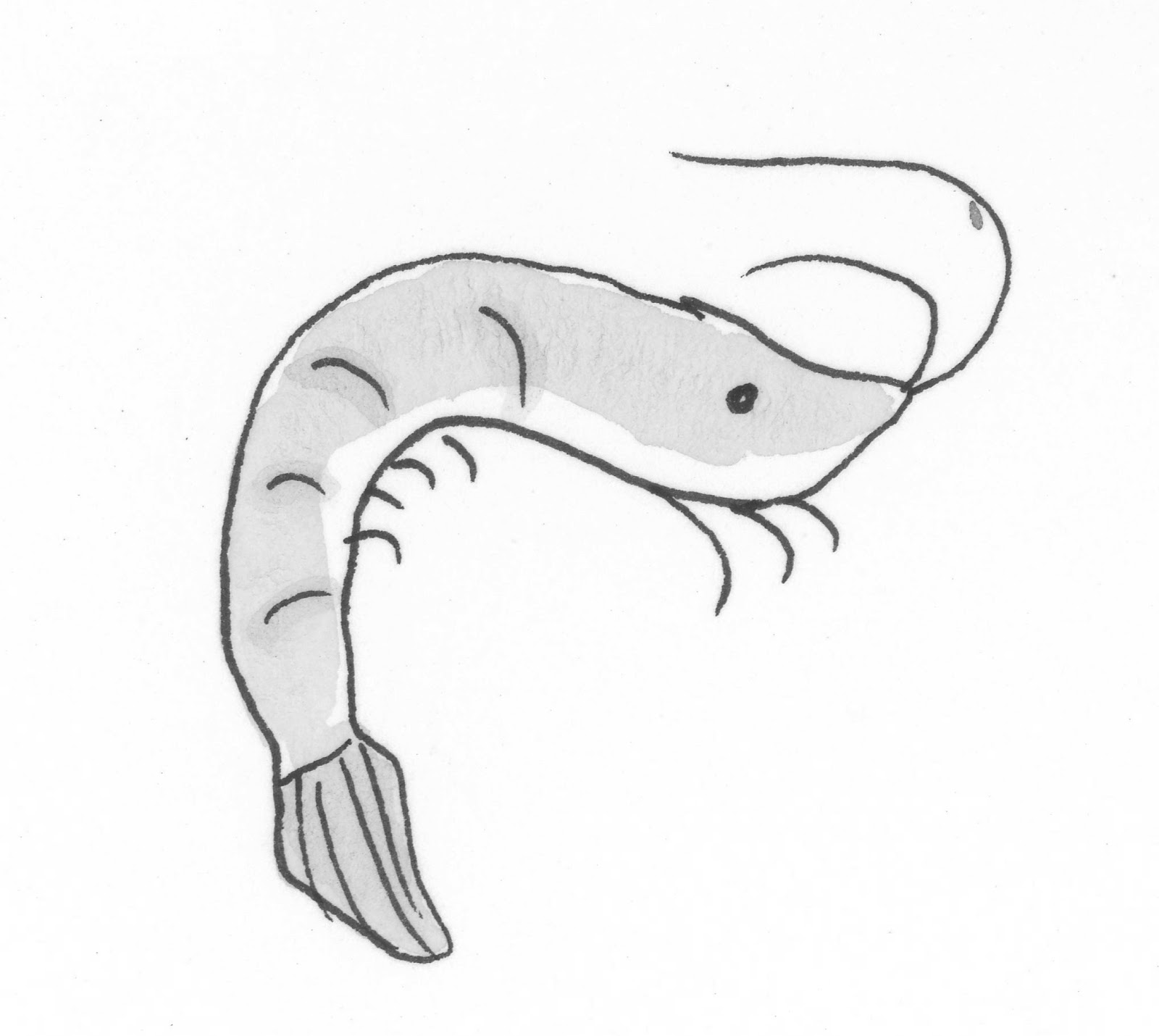
He was never great at understanding kids, their embarrassment, or fear. I don’t think he ever had a clue how intimidating he could be without even trying. In his mind he was exhausted from work, he didn’t think about feelings or his symbol in my life as a little kid growing up. In comparison to me, the tiniest of shrimps, he was a towering and sometimes dizzying figure of cold, curt and frustrating authority.
When I was in fourth grade I was failing a social studies class where the teacher sat in a chair the entire time and read to us out of a book. She was the teacher we had to see for an hour in the afternoon and then go back to our regular class. This was long before school was required to be fun and exciting for kids, equipped with games, videos and apps. Teachers were not expected to be entertainment yet. As a kid it was your job to absorb whatever you could by rote memorization. An environment that was the perfect condition to escape into daydreams and glaze completely out of reality. It was my favorite coping mechanism for things I couldn’t control or make sense of at home.
I, in general, was starting to hate school. My homeroom class that year was awful with an unbalanced group of horrible and sometimes violent boys who made the teacher utterly miserable. One of which actually hit our teacher in the stomach, not yet knowing she was pregnant. My homeroom teacher was a bright, cheerful and sweet blonde lady. I often think of her and how unfair the entire situation was. Our Social Studies class was in the room next door. It was taught by a much older lady, towering in height who talked about having been out shopping with her children the day Kennedy was shot. In any case, I was starting to get bad grades for the first time ever.
I had become desperate to take home some sort of good news, something to be proud of. I didn’t have the best plan. I decided to cheat on a test and got caught, an experience that was terrifying and a bit traumatizing. The social studies teacher grabbed my paper and announced to the class that I didn’t need the test since I already had the answers. She took the paper, dramatically crumpled it up and threw it away. I sat feeling millions of icy needles, piercing my skin from every direction.
With no other thing to do, I looked down and picked up my book with a little mouse wearing skis and scarf on the cover. I wasn’t a cool kid, I wasn’t popular either. I was a nerd and not even a smart one. Humiliation piled on me in metric tons as I sat trying to read about a little mouse escaping a manor, words vibrating on the pages. My eyes filled with tears as I sat staring at clouds of words until class was over.
The boys teased me and asked at the end of class to see my hand to check their answers. Later in the year I asked the same teacher for help when some girls in her class stole some candy my dad had bought me. She pointedly reminded me that candy was not supposed to be at school and stared at me in contempt as if she took satisfaction from the judgement, I had deserved it.
Once my dad found out, I was grounded the entire spring break. He didn’t speak to or even look at me for the entirety of it. I still remember how it felt. I was already humiliated by the teacher. I regretted the entire ordeal enough, but his treatment of me was the most unsettling part of it all. I still remember him passing by me, never speaking to me for that entire week.
One day I attempted to say something to him and he bitterly, uncomfortably glanced at me in a way I’d only seen kids who didn’t like me do so. I gave up and went back to my room. It was spring break and there was going to be a big sleepover for girls at the daycare my mom worked at. I would not be going. My mom argued on the phone with him while he was at work. When she asked why he was being so hard on me his response was, “What are you going to do when she is in jail?”
•
My dad drank, something we as a family ignored. Not by my choice. I suppose it was accepted because we felt it couldn’t be changed. He was an incredibly high functioning alcoholic, saving his indulgences for off days. The situation simultaneously caused great stress in our house, while it was also never to be publicly acknowledged. As best I can tell, his nightly drinking started before I was born. It began as a way to relax and sleep with an erratic shift work schedule.
All poisons work for a while, until years go by and all that moderation shifts into a new tolerance, a new demand, requiring a higher amount. Now you need more, now you can’t be happy or sleep without it. No one thinks about that at 21 or 26. At night my dad was a different person. I knew this by the age of two. This big secret was a huge cause of mental strife for me as well as the complex feelings I had toward him. It affected our family, my entire life, and identity.
Alcoholism comes in different degrees. I think my parents tried to excuse it because it was controlled. He worked a six-figure job, so it couldn’t be alcoholism. It was an impressively high functioning alcoholism, which is different and helps enable people to believe nothing is wrong if bills are still being paid on time, food and a roof are present. In my parents’ volatile childhood generation of daily pain and poverty, how dare I speak out at our small problems? I mean, I had everything!
It hurt to have my parents question why I had anxiety as a kid. Why as a child I took to a strange habit of biting my knuckles, biting my lip, twirling my hair, my stomach made of pure acid, chronic zoning out that affected my schoolwork and no one seemed to know why. The constant repression of the truth made me a bumbling alien of nerves that I tried to hide from everyone, all the time. I didn’t even know what I was hiding or denying, a bizarre existence.
My parents didn’t get it, or the lifetime of fierce distrust it gave me. Constant fear of always waiting for that person or thing to become something else, mean, scary, unpredictable. This distrust was also matched by an equally confusing identity crisis of always trying to figure out how normal should be. All while living with unidentified bags of emotions. It makes sense now that I constantly had dizzying highs and lows.
•
I don’t include this part of my life to shame my dad, he clearly felt that inside all along. In fact, I hate how much society feels comfortable judging people who are struggling. I detest anyone who smiles and enjoys seeing others suffer. People suffering need support, not cruelty. It’s impossible to talk about my dad without bringing up our dysfunctional relationship, our family and his drinking. In order to communicate the extraordinarily complex feelings I had toward him, this comes with it.
I was incredibly resentful towards my parents for forcing me to pretend that everything was fine. It’s unfair for parents to speak on their kids behalf, or to dismiss an obvious dysfunction that will affect all of their child’s relationships they will ever have. From the moment I was born, everyone around me was trying to get me to believe it was all normal, which I never bought into.
The family propaganda was heavy. My parents could never see it. They married each other, loved each other, had years of memories and bonding with one another as young people full of depth and history. Alcohol was only a small part of their world as they knew each other, but what about a kid’s much tinier and limited world? I didn’t know my dad in any other way than the imposing person who hovered throughout my life, with few emotions.
How do you rationalize as a little kid that the person who wants to protect you the most, is also four to five times out of the month, after 10 pm, the person that scares you the most? How do you live with a person, who is two different people? It eventually divides your personality, thoughts, feelings and life.
My parents should have definitely had counseling for their childhood traumas, to overcome their anxieties and internal struggles. Instead, it’s easier to say: don’t complain, mental health isn’t real, therapy is whining, others have it worse, don’t be ungrateful, don’t say bad things about our family. In all fairness, poor and brown people don’t have access to mental health help anyway, so why would they waste time believing in it?
•
As a child I didn’t understand or care for the charade in our life, pretending we didn’t notice the alcoholism. Sometimes I lacked the ability not to be too direct. One bitter memory, my dad had taken our wooden coffee table and thrown it in the backyard. All because he stubbed his toe on it in the dark, during a night of drinking. I still remember that night in the dark, terrified at the mysterious sounds coming from the kitchen, holding onto our dog to keep her from being with him.
Then the next day I saw what the noises had been. The table upside down in the grass in the backyard. For days it sat outside collecting pink crepe myrtle flowers and rain. Both of my parents refused to address the situation out of pride and spite over the incident. I watched the wooden coffee table, through the sliding door window in the kitchen. It was a symbol of our home, where I liked to sit and color on. Where underneath I secretly drew silly pictures and bad words in crayon. Now it was sitting like a dead bug, upside down for days. It made me sad and more frustrated as the time ticked by. I watched and waited, hoping someone would finally get it.
Eventually, I grew tired of the meaningless skirmish between my parents. One determined afternoon, I pulled it back onto the patio, cleaned it up and somehow dragged it back inside the house where it belonged all by myself. I was ten. A terrifically shrimpy ten year old at that. To this day I wonder if both of my parents assumed the other had brought it in.
Weeks later, while my dad was in the kitchen, my mom, sister, and I sat nearby. Somehow the incident managed to come up. My dad actually muttered an acknowledgment of the table debacle and complained about injuring his toe on it, as a feeble justification. In the honest and deadpan face I could only inherit from him I muttered, “Why didn’t you just turn the light on?” There was a moment of unprecedented and absolute dead silence that hung in the room. Somebody had challenged his secret bullshit, somebody else had acknowledged the incident. At that moment I feared having gone too far. Eyes widened, faces froze… followed by the howls of laughter from my mom and sister. My dad sheepishly receded away to the kitchen to hide his amusement and embarrassment for which he had no response.
•
There was also the night in which my parents were supposed to go out dancing as they did once a year when I was a kid. Per usual, my mom took hours getting ready and my dad, probably out of introverted anxiety, started drinking. I was about nine or ten and in the living room, doing kid stuff. I noticed he was drinking but didn’t think much about it, as it was normal. When my mom finally came out and saw his state she actually looked me dead in the eye and asked, “Why did you let him drink so much?” I still remember how baffled I was at the question. Sheepishly, I said nothing. The insanity of that question still roots around in my mind.
Other than that, we had a “fairly normal” home I guess, good food, clothes, stable jobs, predictable patterns. But it was messed up to have sprinkled in between all of the “normal” other mental images of my mom crying at night, my dad breaking things on a bender, horrific silence after some sort of episode and weird random tension of unresolved feelings. But I think what I hated most was the endless weight of it all that you could never escape, nor ever face the entire truth of it.
It made me depressed at three years old. It made me chronically nervous, it made me question life, adults, authority and relationships in a way no kid under five should have to. Heavy shit for a kid to be confronted with so soon. From as early as I can recall, I wanted answers as to why people were the way they are. Why do people hit their head on the same wall every day? How do things get like this and we don’t talk about it?
•
My dad was aware that he sometimes didn’t do the best job as a dad. He knew he lacked the ability to connect to me and my sister. We had to learn his language, how he would display emotions we never saw through actions. His care for us almost never contained words. Often it was by giving us huge quantities of food at any opportunity.
After defending myself at school, a boy pushed me into a wall and scraped up my arm. I came home sobbing at both the humiliation and realization that as a girl, life was not going to be fair. We went to Luby’s for dinner that afternoon, my face puffy and white like a crumpled piece of paper from crying. While in line my dad grabbed a giant bowl of pudding from the dessert section for me. I didn’t even like pudding, but my mom flashed a smile that told me he was showing his care.
In high school, I came back from a museum date in Houston with my boyfriend that didn’t go as expected. Walking past me in the garage he asked, “How was the museum?” I stopped and turned by the washer and dryer, trembling. As much as I never showed any emotion to my parents, I could not hide the horrible experience that took place. I immediately burst into tears.
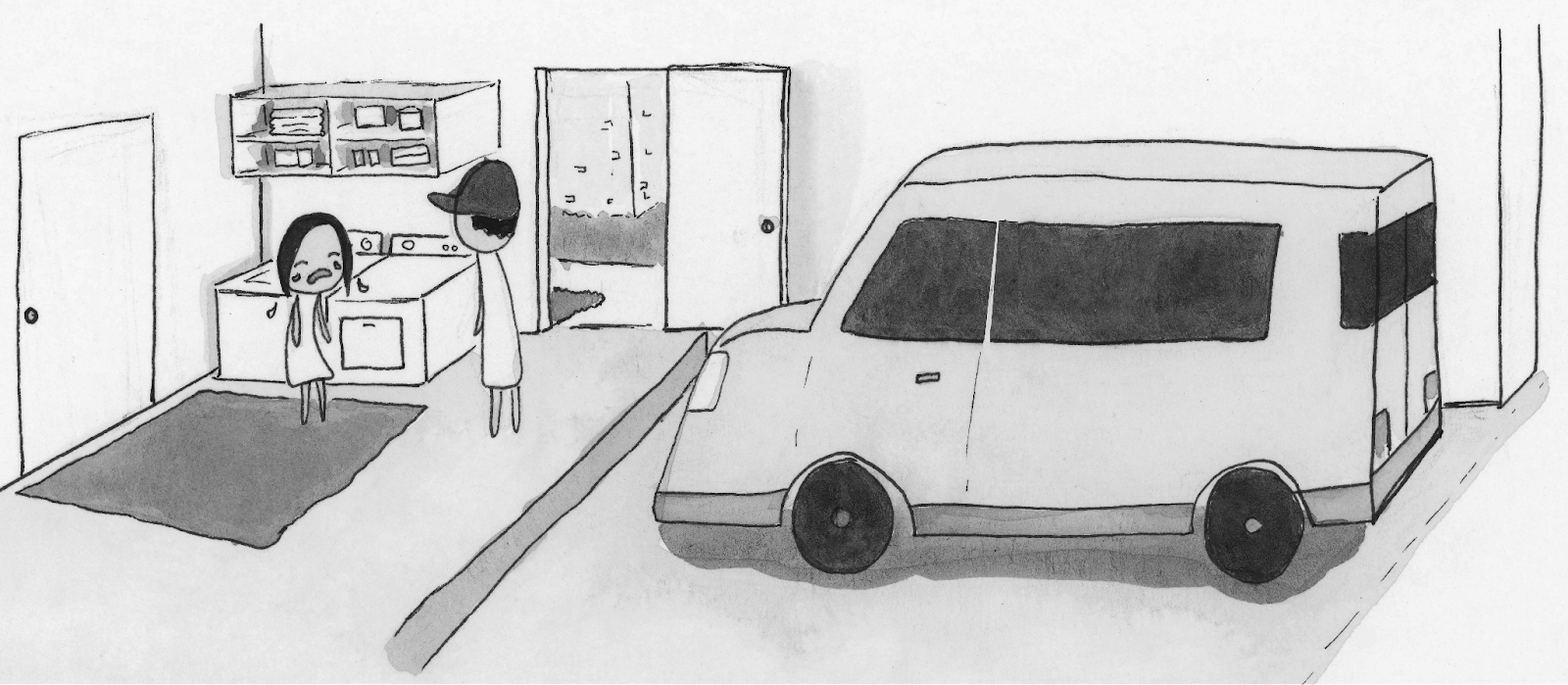
Defeatedly, I barely got the words out, “We… got robbed.” My dad had only hugged me a few times in my life, this was one of them. It was by far the most nervous I had ever seen him, with sympathy in his voice I’d never encountered, “What happened? Did someone pull a gun on you?” and then he began aggressively hugging me. “No”, I shook and wept, “They broke into the car, they took my wallet and the camera.” He sighed, relieved that I’d been spared an altercation. “Oh, man those guys are always out there. That’s nothing. It just takes them a minute.”
His terror immediately vanished at the report of no violence. I stood blankly and he seemed fine again. I was still so mortified at the violation. The trip was my idea, someone took my boyfriend’s expensive family gift and our own address on my drivers permit was in the hands of a stranger. I felt ill but all my dad cared about was that nothing physical had happened.

There was the trip to the grocery store when I was about ten in which my dad defended me to the cashier. We approached the checkout register and the woman working was on the phone. Timidly I stood, coupons clutched in my hands, quietly and urgently waiting for her to get off the phone so that I wouldn’t bother her. We listened for what felt like an eternity, at her private, detailed conversation, monotonously arguing with someone on the other end. After we were almost done with all our items being rung up, she finally hung up.
Nervously, I handed her my coupons, which my dad could care less about. I liked cutting them and thinking I was helping. Looking down she snapped at me, “You’re supposed to give those to me before,” to which my dad, much faster, with his authoritative voice bludgeoned, “You were on the phone.” The lady looked down, and squeaked an apology. I froze like a bunny at the entire situation that I felt was all my fault.
My dad was like a snake, striking at lightning speed and then returned back to writing his check, as if he never looked up. I glanced at him while we walked back to the van, no noticeable change. He said, “If she hadn’t apologized I would have left all that shit there and gone to the store across the street.” My dad could and did endure a lot in his life, but having someone talk down to his kid apparently wouldn’t be one of them.
 Shine A Light On Me