During September, my stress levels and anger were still running high. I can’t remember anything specific except I was mad as usual, having to accept the way things were. That was the bulk of my anger, the idea that my life story was now: this is Michelle, she’s 33 and her dad is dead. I absolutely despised it. I still felt suspended in shock and disbelief at the entire ordeal. On a daily basis I would think to myself and sometimes even say out loud, I can’t believe this happened.
Having to remember everyday what happened to my dad and then having to see other people, who were happy, who have not watched someone suffer a long death made me endlessly resentful. I was scorned and depressed. I couldn’t imagine being able to ever accept it. Jon was sad and frustrated with my constant mood swings. I can’t imagine what he was going through during that time. I honestly don’t know how he coped. It was definitely a testimony to how much of a patient, supportive and compassionate person he is.
•
One night, I had a long and winding dream. It dragged on for what felt like forever. I was back at the house and everyone was there. It was just like that last spring with my niece and nephew. I was sitting in the back of the house, bored out of my mind, watching cartoons with Josie and Michael.
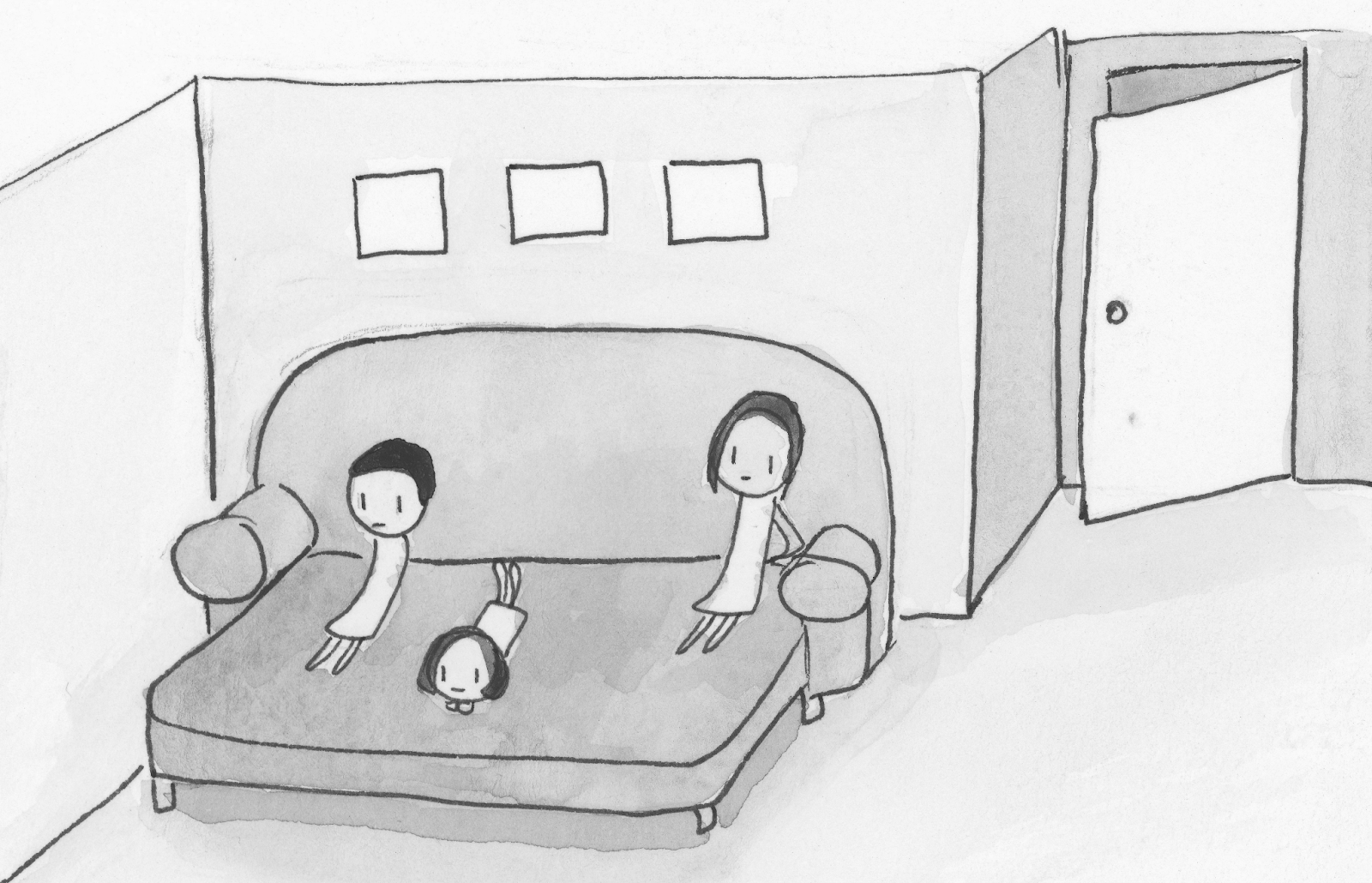
Eventually everyone was in the kitchen making early dinner, just like when I was growing up. The dream had been mundane, painfully so that it felt like actual hours. In that way it felt incredibly real and not like a dream at all. While in the kitchen chatting, out of nowhere, my dad walked in from the living room. He wasn’t sick. He looked like himself in the way I had almost forgotten. He was dressed for work in his blue uniform coveralls, coming into the kitchen after getting ready. Just like when he would work the night shift. We all stopped talking and looked at him.
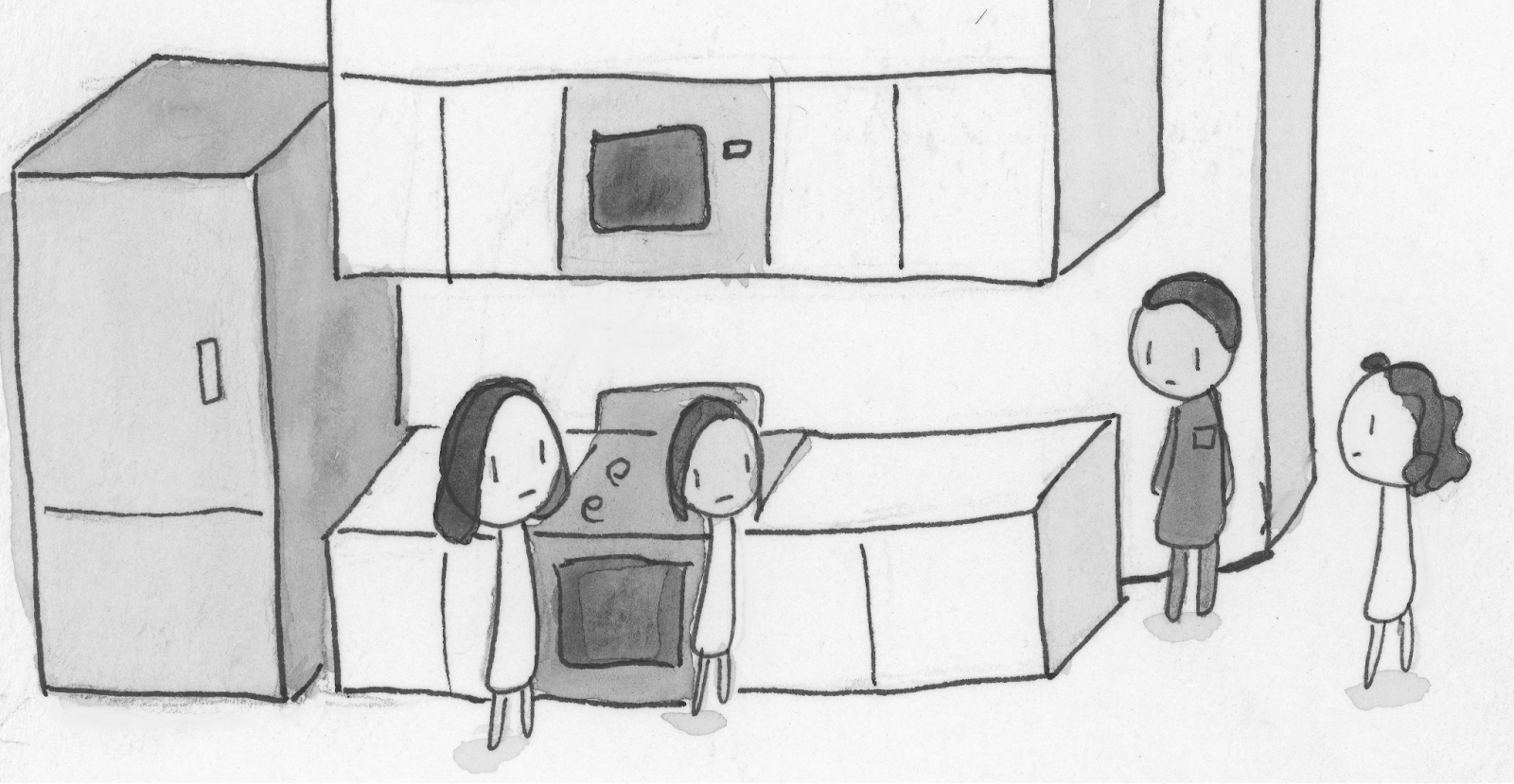
He made his usual raised eyebrows and silly grin as he always did to show he was in a good mood because his regular face was intimidating. We all continued to stare at him and then at each other, as if wordlessly asking how he was there. Suddenly, he started to leave, making his way through the tiny room, around us, out the kitchen door and into the garage. I couldn’t believe it. I ran after him.
His car was parked strangely, in the driveway instead of inside the garage. He opened the door and was about to get into the driver seat. How could he leave like this? How could he not say something? How could he leave without saying something to us, to me? Becoming upset, I put my arms out towards him, wanting to hug him, wondering why he was leaving and without even saying goodbye to me.
With the car door open he sat down in his seat and put his arm out forward as if to stop me. Confused, I stood there. He looked at me and then shook his head like he was trying not to become upset. And then he said to me in a pained and sad voice, “Just be happy.” He closed the door and drove away down our street, as I stood alone, watching in shock. I woke up, my face hot. Blinking into the view of a dim ceiling, my eyes streamed tears.
•
One day while cleaning I came across a painful souvenir. On the floor of my closet was the shirt I was wearing the day I’d found out about my dad’s cancer. That busy Friday, that night I stayed late on campus. I’d been forcing myself to wear it, to reject the idea of its emotional baggage, to be stronger than the feeling. To be tough, in a world that encourages that mentality at all times. I had been trying to prove to myself I didn’t need to run from it, that I was more rational than that. It had been a year, I was tired of the reminder. I was tired of whatever game I had made myself play by keeping it. I picked it up and angrily threw it in the trash.
•
Later that September at school, there was a Go Pink day for Breast Cancer Awareness. A lot of teachers and kids were all into it. While the early morning bell rang, I started to feel something was wrong. I ducked out of the classroom into an empty neighboring room and began sobbing uncontrollably like a faucet turned on high.
For most people and most cancers, you had a chance; you might “win.” There is a possibility of a happier outcome for other cancer patients. My family didn’t experience that hope, we never had a chance. All we had was a death sentence. There was no massive outpouring or high visibility support for Pancreatic cancer in public places that I’d ever seen. I was glad to see so many people motivated to raise awareness for breast cancer, but I felt the pain and burden of our unknown, much lonelier club. I cleaned my face, got some Visine drops in my eyes and went back to work.
•
A few weeks later my first session of student teaching had ended. My second school was a different challenge but I found myself rolling with it and doing okay, which was a relief compared to how it had started. The rigorous schedule kept me busy. I was becoming familiar with my new life. Leaving for work in the early morning hours, I often thought of the millions of hours my dad had done the same routine for our family, how lonely it must have been. Things I had never thought of before. During those days and a year or more after his death, I thought about my dad daily. More than I ever thought was humanly possible to think of someone.
 Shine A Light On Me